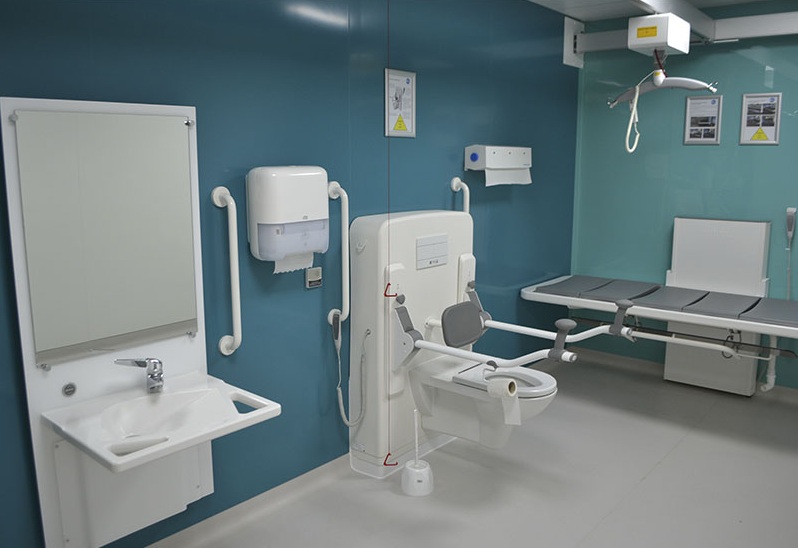

We are now ready to introduce the Flexi4Single. It is a combination of our free‑standing 4Single table and the Flexi tabletop frame creating a brand‑new height‑adjustable kitchen solution.
The Flexi4Single lifting system for kitchen worktops, can be tailored to meet individual needs. It is ideal for rooms with only one supporting wall. The frame construction requires just a single load‑bearing wall, providing maximum stability without compromising design freedom or flexibility in the layout.
Flexi4Single allows you to integrate both the sink and hob in the same worktop, so the entire preparation and cooking area can be adjusted instantly in one smooth movement. This makes it easy to create ergonomic, accessible and user‑friendly kitchens for both seated and standing users – in private homes, care environments and professional settings.
The system offers 30 cm of vertical adjustment, ranging from 65 cm to 95 cm. This flexibility ensures comfortable access for wheelchair users as well as standing individuals.
Its smart angled frame design requires only one load-bearing wall, simplifying installation while maximizing under-counter accessibility and legroom.
Built for durability, the system supports up to 150 kg of evenly distributed weight — making it suitable for sinks, hobs, and heavy countertops.
The frame can be tailored to different worktop sizes and layouts, allowing seamless integration into a wide variety of kitchen designs.
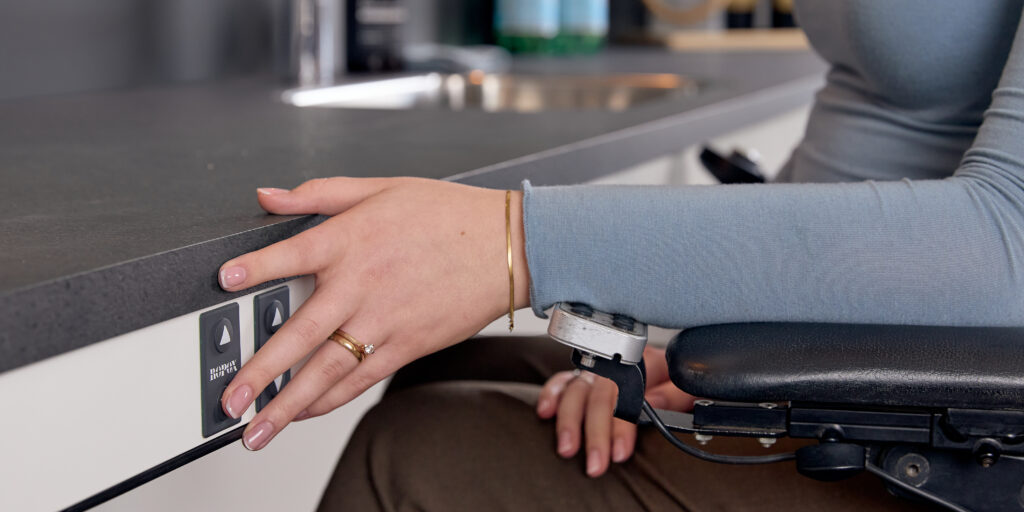
A simple push-button control ensures smooth and intuitive height adjustment, making operation easy for users and caregivers alike.
It’s possible to buy a safety-stop. The safety-stop is placed underneath the table, at the edge, which makes it optimal for seated users.
When combining the Flexi4Single to other Ropox products such as the upper cabinets Diagonal or VertiInside, the Smartbox can be used to ensure collision‑protection between all units. Please note that each system requires its own Smartbox.
For full technical specifications, installation drawings, available accessories, and downloads, please visit the Flexi4Single Worktop Lift System product page.
With the launch of the Flexi4Single worktop lift system, Ropox continues its mission of creating solutions that support dignity, independence, and everyday functionality. The system combines modern design principles with advanced ergonomics, delivering both aesthetic appeal and practical performance.
As demand grows for adaptable and future-proof interiors, the Flexi4Single offers a smarter way to design accessible kitchens that truly work for everyone — at any height.
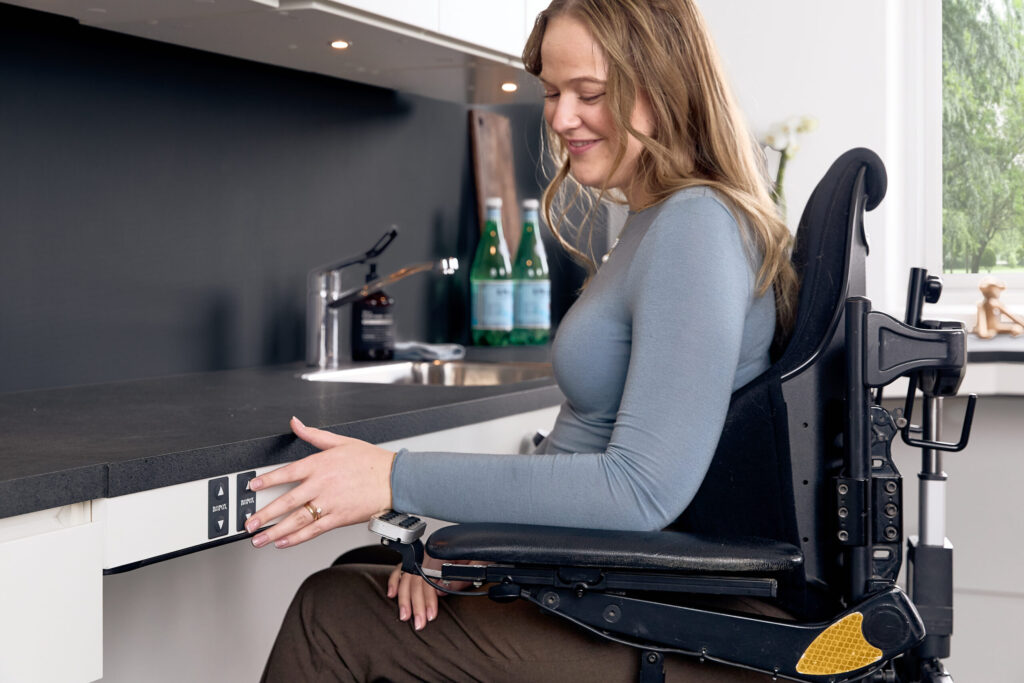
A Changing Place toilet is a large accessible toilet designed in accordance with The British Standard BS 8300-2:2018.
It provides sanitary accommodation for people with multiple and complex disabilities who has one or two assistants with them. They are facilities designed for people who cannot use standard accessible toilets, as a standard distabled toilet is typically designed for individual use and does not offer sufficient room for one or more carers to assist the user. A Changing Place toilet provides more space than a standard accessible toilet, and they also provide specialist equipment to assist the user and carer. When you have a Changing Place in your building, you provide people with severe and complex disabilities with the ability to go out and enjoy public spaces in a dignified manner.
This guide provides you with answers on what a Changing Place is, how to install it and comply with the BS 8300-2:2018 regulations, what the recommended equipment is as well as examples of room layouts. If you need anything further, please do not hesitate to get in touch.
Today, 250,000 people with profound and multiple disabilities in the UK require access to a Changing Place because they are unable to use standard toilets or regular accessible toilets. Many toilets are too small to fit a user and a carer, and, often, they do not have the right facilities.
This leaves people with disabilities with one of two choices: to stay at home or go out knowing that they might have to be changed on the toilet floor.
Not only is this dangerous and unhygienic, it’s most of all undignified.
Now, Changing Places Toilets are compulsory in new buildings, and they are being installed across England – and many more are in the pipeline. This means that children and adults with disabilities can get the needed support, equipment and space when visiting public spaces.
A quarter of a million people in the UK need a Changing Place. These are people with profound and multiple learning disabilities and people with other physical disabilities who need extra equipment and space to use toilets safely and comfortably. Those in need of a Changing Place toilet include:

Approved Document M (Doc M) of the Building Regulations provides guidance on the access to and use of buildings, including the requirements for Changing Places toilets. As of 1 January 2021, the amendments to Approved Document M require certain types and sizes of new or refurbished public buildings in England to include at least one Changing Places toilet.
You can access Part M of the Building Regulations, which includes the requirements for Changing Places toilets, through the following links:
Approved Document M: Access to and use of buildings – Part M on LABC
Part M – Access to and use of buildings on Planning Portal
Changing Places toilets must be provided in new or significantly refurbished buildings that are publicly accessible and meet certain criteria, such as large public venues, shopping centers, and transport hubs.
Shopping centres, airports, railway and bus stations, town halls, educational establishments, hospitals, supermarkets, cinemas, sports stadiums and arts venues are just some of the buildings that are required to include at least one Changing Places toilet in any new builds or major refurbishments.
The Equality Act 2010 states that service providers have a duty to make reasonable adjustments where a disabled person would otherwise be at a substantial disadvantage. It also requires service providers to try and remove barriers that impede access by disabled people.
As per the Building Regulations Part M, toilet accommodation within a building must be suitable for all who use the building. The location of a toilet should also be considered, and the time taken to reach a wheelchair accessible toilet should be kept to a minimum. Here is a list of buildings that need a Changing Place:
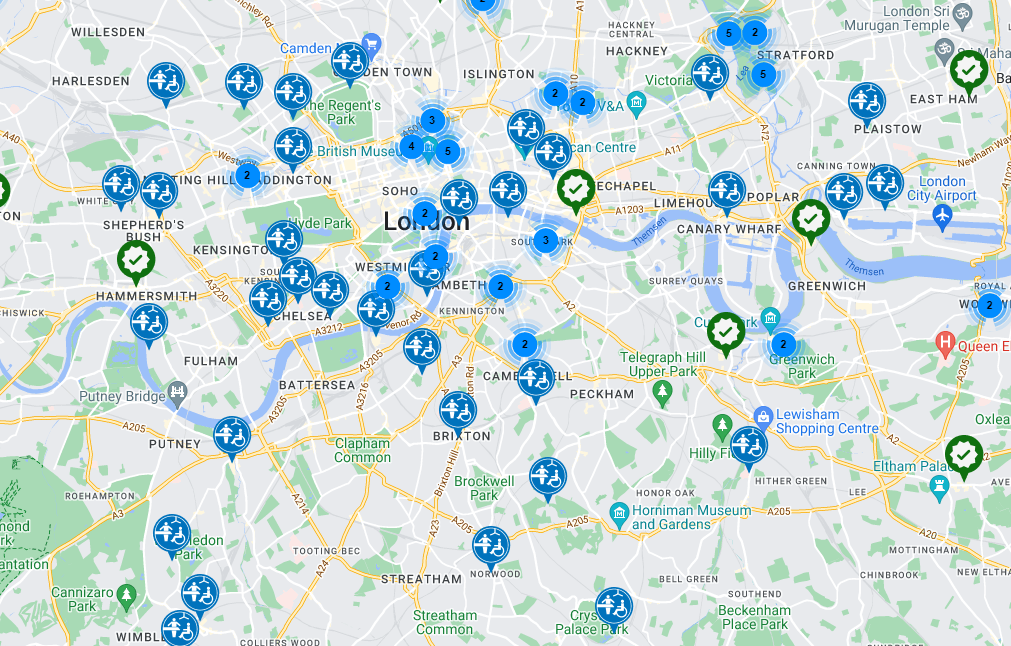
All approved Changing Places are featured on the Changing Places Map. This helps families with disabled family members plan their days out.
To register your facility as an approved Changing Place, you need to document that it meets the standards set out by the Changing Places Consortium.
When your Changing Place is registered, it will be promoted as an official Changing Place and provide the disabled community with the ability to visit your site.
To get on the Changing Places map, the facility should meet the following requirements:
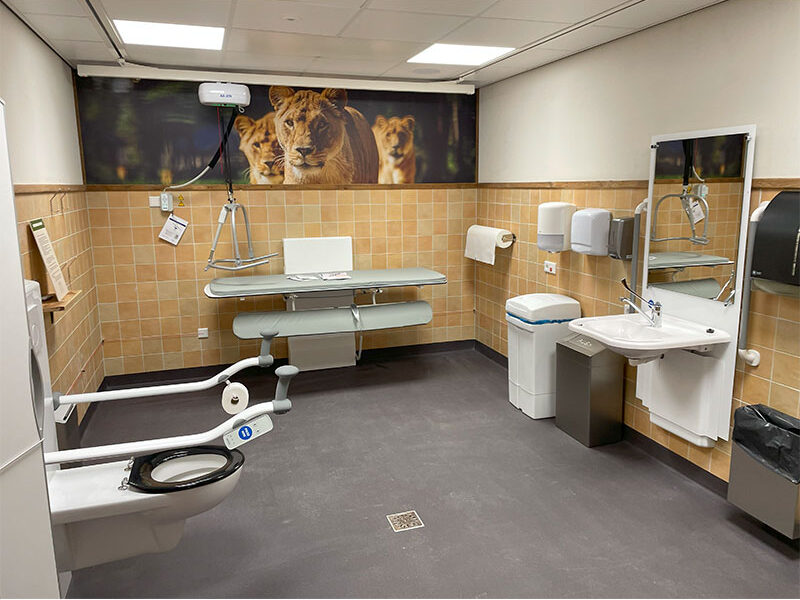
Arranging the equipment correctly ensure that people with disabilities and their carers can access and use the facility with ease. There are a couple of key considerations you should bear in mind when planning your Changing Place.
Additional equipment to be considered:
“The feedback we received was fantastic with many people commenting on how easy all the equipment is to use and how much room there was for wheelchair users and their carer or family member who may be assisting them”. Read case study about Chris MaddoxChanging Place in Burton University Hospital
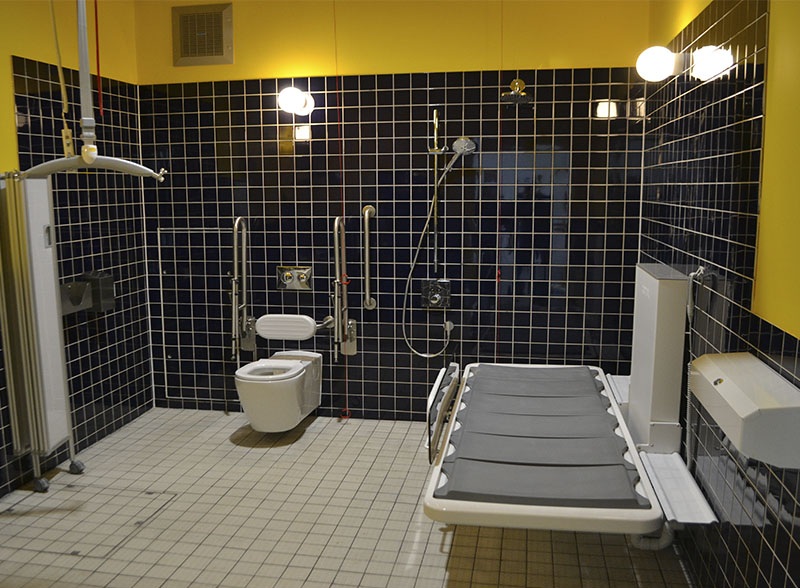
We are delighted with the equipment which has been installed and I know it is going to help our many visitors with a disability. When we received the on-site training, we were all surprised by how user friendly all the equipment is and I have no doubt visitors will be able to use it with confidence”. Go to the case story here and read more
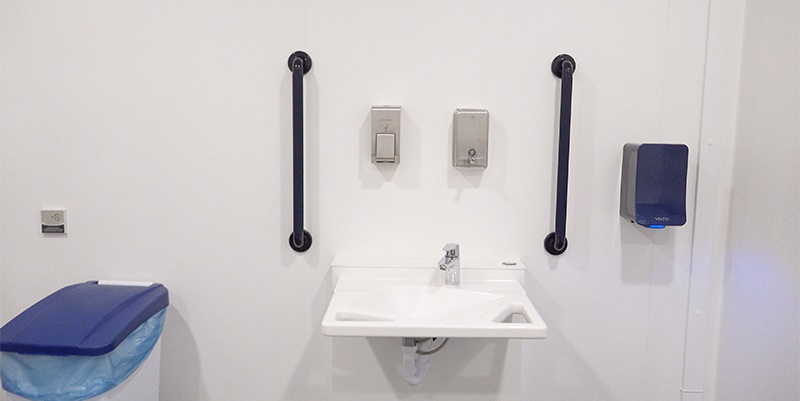
“As we normally attract visitors from all over the UK and overseas, it is imperative that we can cater for people with all levels of mobility and independence and tapping into the knowledge and experience of companies such as Ropox certainly helps us achieve this”.Go to the case story here and read more
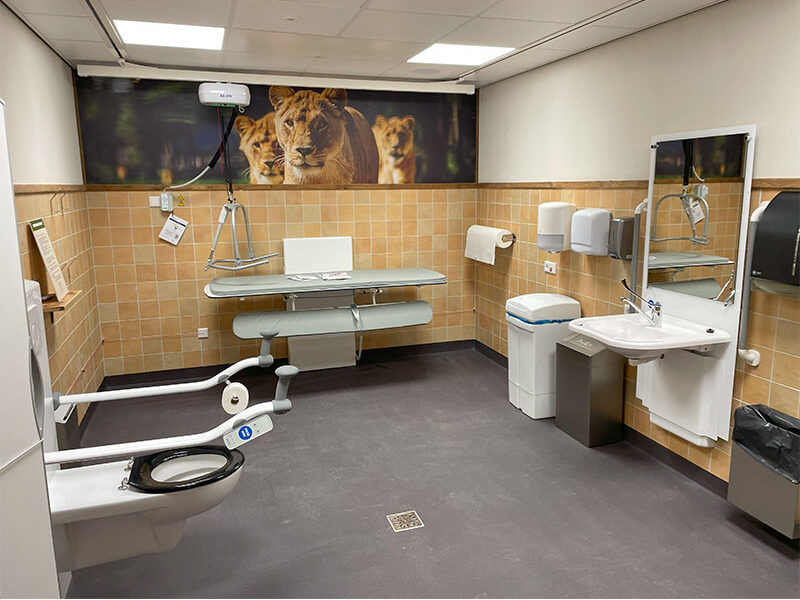
“When we heard about the Changing Places Toilet, we immediately went for it”. Go to the case story here and read more
The equipment in a Changing Places toilet should be designed and planned in accordance with the British Standard BS 8300-2:2018 and the guidelines set forth by the Changing Places Consortium. These standards ensure that the facilities are accessible, safe, and comfortable for individuals with severe disabilities. Key features include a centrally placed toilet with adequate space for carers, a height-adjustable changing bench, a ceiling-mounted hoist system, height-adjustable washbasin, grab rails and toilet support arms. Adhering to these guidelines guarantees that the facilities meet the highest standards of accessibility and usability.
ROPOX offers all the necessary equipment for creating a Changing Places Toilet for disabled. Read more about Accessible Bathroom solutions here.
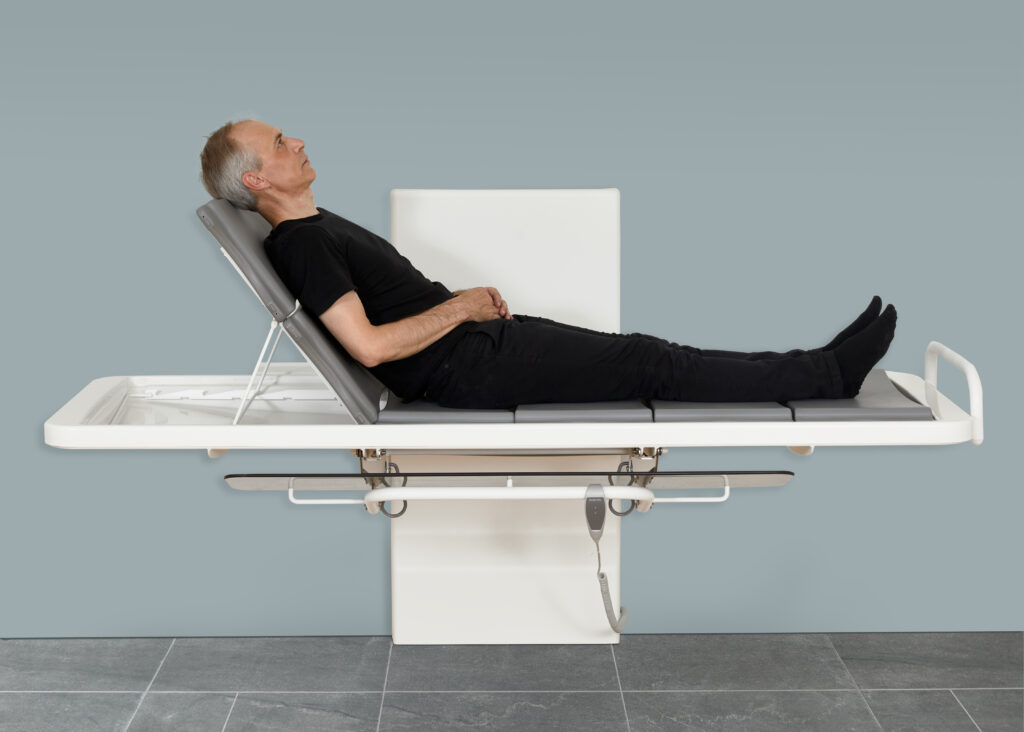
• Adult-Sized: The bench must be adult-sized with around 1800mm in length and 800mm in width.
• Height Adjustable: The bench should be height adjustable to facilitate easy transfer from wheelchairs and to allow carers to assist users comfortably.
• Wall-Mounted: The bench should be wall-mounted to provide stability and to maximize the available floor space for maneuvering
• Safety Rails: The bench should have safety rails that can be folded up or down to provide additional security for the user during transfers and changing
Explore our height-adjustable adult changing and shower beds
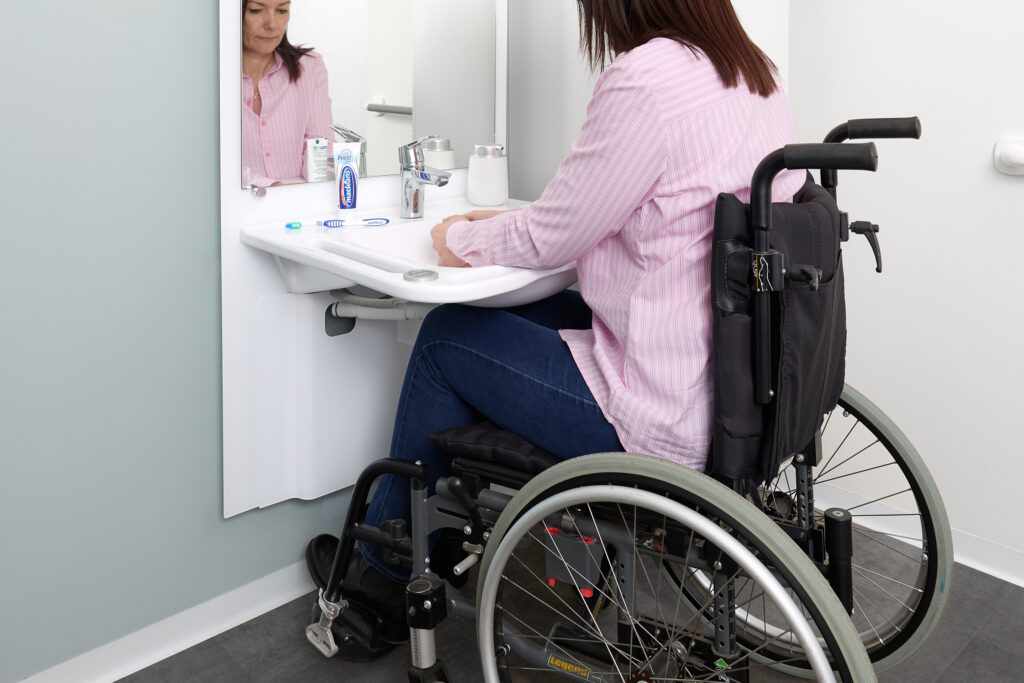
• Height Adjustable: Ideally, the washbasin should be height adjustable to accommodate users of different heights and those in wheelchairs.
• Clear Knee Space: There should be clear space below the bowl of the washbasin to allow wheelchair users to access it comfortably.
• Height from Floor: If a height-adjustable basin is not available, a standard basin can be installed at height: 720-740mm from the floor.
• Accessibility Features: The washbasin should have lever-operated or sensor-operated taps to make it easier for users to operate.

• Height: The support arms should be mounted at a height of 680-700mm from the floor to the top of the arm when in the horizontal position.
• Length: The support arms should extend at least 750mm from the wall to provide adequate support for users when transferring to and from the toilet.
• Positioning: The support arms should be positioned on both sides of the toilet to provide support from either side.
• Grip Surface: The support arms should have a non-slip surface to provide a secure grip for users.

• Horizontal Grab Rails: on the wall adjacent to the toilet, at a height of 680-700 mm from the floor. Another one should be placed on the opposite wall.
• Vertical Grab Rails: on the wall adjacent to the toilet, starting at a height of 700 mm from the floor and extending to at least 1400 mm. Another one should be placed on the opposite wall.
• Drop-down Rails: On both sides of the toilet positioned at a height of 680-700 mm from the floor when in the down position.
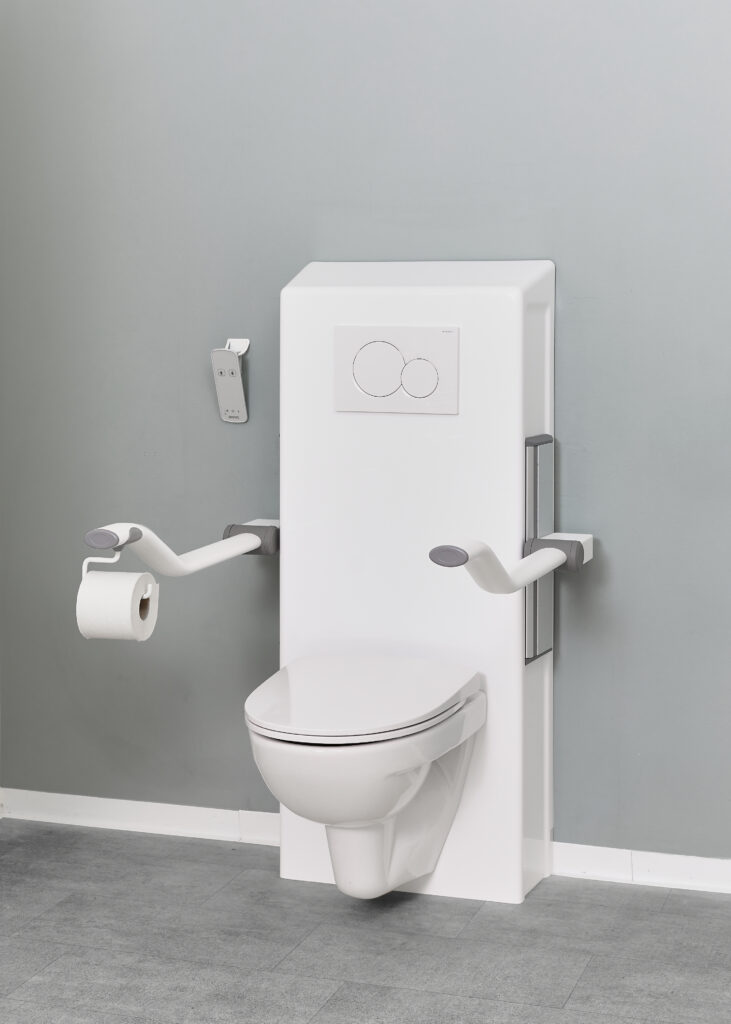
• Height Adjustability: The toilet lifter should be height adjustable with a range that spans from 400mm to 600mm above the floor.
• Weight Capacity: The toilet lifter should be robust and capable of supporting a significant weight, typically up to 200kg.
• Control Mechanism: The toilet lifter should have an easy-to-use control mechanism, such as a handheld remote or wall-mounted control panel, to allow users or carers to adjust the height as needed.
• Safety Features: The toilet lifter should include non-slip surfaces and locking mechanisms to prevent accidental movement during use.

Suki RamArea Sales Manager, sra@ropox.com
“Changing Placs is something i’m passionate about because having a Changing Place enhances and benefits the users and carers. If you need support to design the ideal bathroom layout that comply with the building regulations, I’d be happy to assist. I can also advice and support you in engaging with architects, contractors and occupational therapists to ensure the best solution and high standards in your specific project.”
Creating an adaptable kitchen is essential for ensuring that everyone, regardless of their physical abilities, can enjoy the heart of the home. A kitchen is one of the rooms we use most often during a day, and it is important that it is easy to use. With a touch of inspiration, an accessible kitchen can be tailored to meet your needs and reflect your personal style.
An adaptable kitchen should be a welcoming environment for everyone, designed to suit your preferences and design aspirations.
At Ropox, we specialize in solutions for the adaptable and accessible kitchen, offering a range of innovative products designed to make everyday kitchen tasks easier and more enjoyable for everyone. In this article, we will explore key considerations and tips for designing an adapted kitchen, focusing on accessible kitchen design and providing a comprehensive guide.
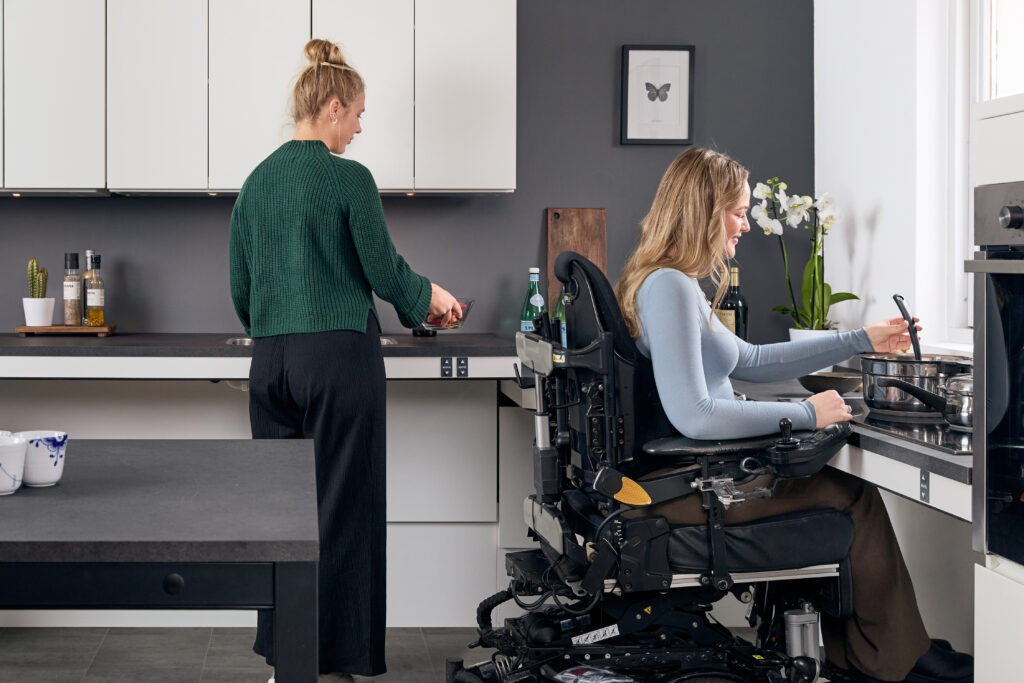
When designing a accessible kitchen, it’s crucial to understand the specific needs of the users to ensure that they can use the kitchen in a comfortable way without being limited. This involves considering mobility issues, reach limitations, and the need for support and stability. Height adjustable kitchen worktops and height adjustable kitchen upper wall cabinets are an essential part of an accessible kitchen, as they allow users to perform any daily kitchen task such as cooking and cleaning.
An adapted kitchen should be flexible and customizable to cater to these diverse requirements.
Understanding the specific needs of different users is crucial in designing and planning a kitchen that caters to their requirements. Each group, whether elderly, wheelchair users or people with limited mobility, has unique challenges that need to be addressed to ensure a safe and comfortable kitchen environment.
Older adults may have reduced mobility and strength, making it difficult to reach high shelves or bend down to low cabinets. The solution is height-adjustable cabinets and worktops that can be tailored to the user’s needs.
People with various disabilities may need extra support and adaptations. This can include ergonomic handles, easily accessible appliances, and sufficient floor space to maneuver safely.
Wheelchair users need enough space to move around and reach all necessary areas in the kitchen. Height-adjustable worktops and cabinets that can be pulled out from the wall are essential to ensure they can use the kitchen without difficulty.
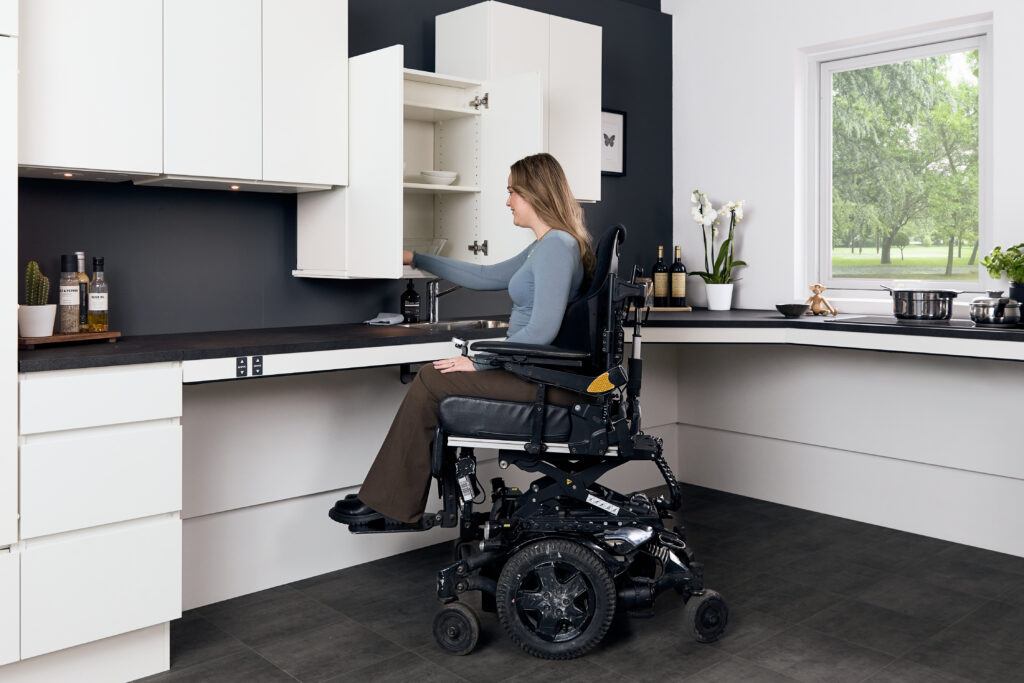
Designing an accessible kitchen for the people with limited mobility is about more than just functionality; it’s about creating a space where everyone feels comfortable. By incorporating height-adjustable features, accessible appliances, ample counter space, ergonomic design, and smart storage solutions, you can create a kitchen that meets the needs of all users.
To properly cater to the various needs of people with limited mobility and elderly, a kitchen needs to comply with these requirements:
To ensure correct spacing and accessibility, consider the following:
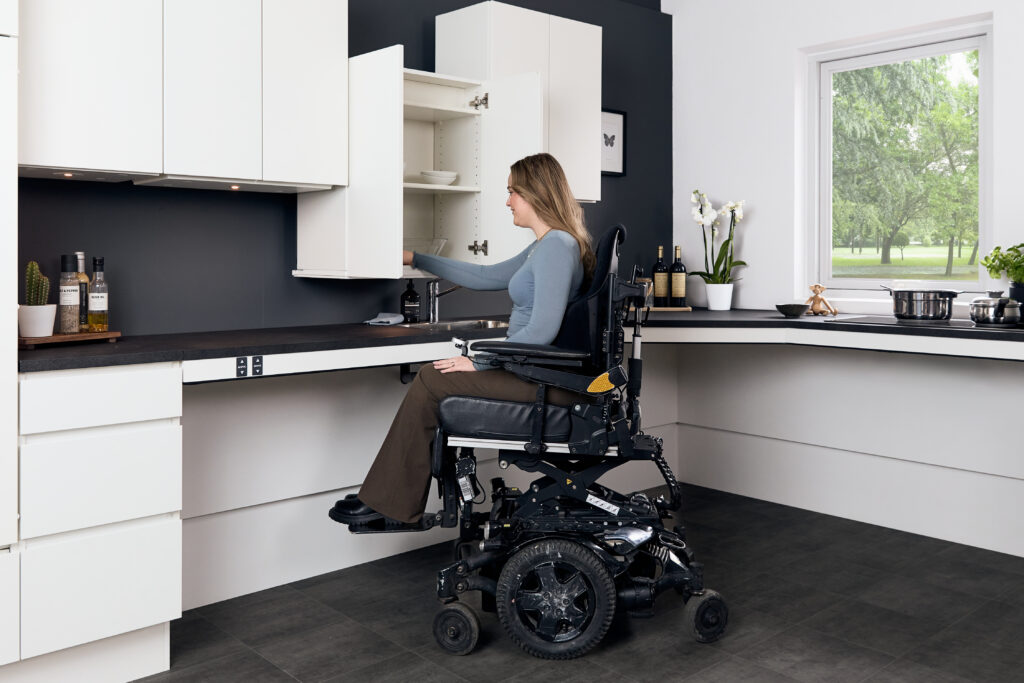
One of the most important features of a accessible kitchen design is height-adjustable worktops. These allow users to adjust the height according to their needs, making it easier to prepare food. With a height-adjustable worktop and by removing base units, seated users get sufficient room for the wheelchair under the table, and it enables them to reach the tap and use the stove without any problems. Adjust the height with the control panel, a control device, or a remote control.
At Ropox, we offer a variety of height-adjustable kitchen worktop solutions that can be seamlessly integrated into any kitchen design.
Height-adjustable upper cabinets and movable kitchen cabinets are also essential for ensuring that a user with limited mobility can reach the cabinet contents without hassle. This solution is suitable for both sitting wheelchair users and standing use.
In our range, you will find both upper cabinets that are height adjustable – either manually or electrically, and upper cabinets that are height adjustable and can move out from the wall to come closer to the user. Diagonal is a lift system that is developed for people with limited physical mobility, and it provides elderly and wheelchair users with the flexibility and freedom to use the kitchen on equal terms with everyone else. There is also a solution where the cabinets itself stays in place, and only the shelves are height adjustable.
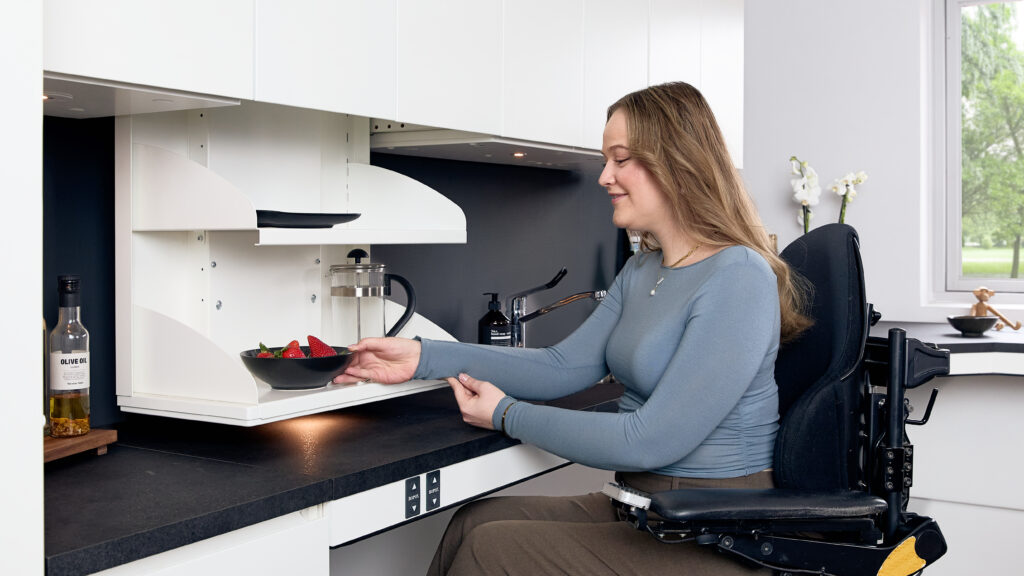
Ensure that all appliances are within easy reach and can be operated with minimal effort. This includes ovens with side-opening doors, pull-out shelves, and touch-control interfaces. Positioning appliances at accessible heights can significantly enhance usability.
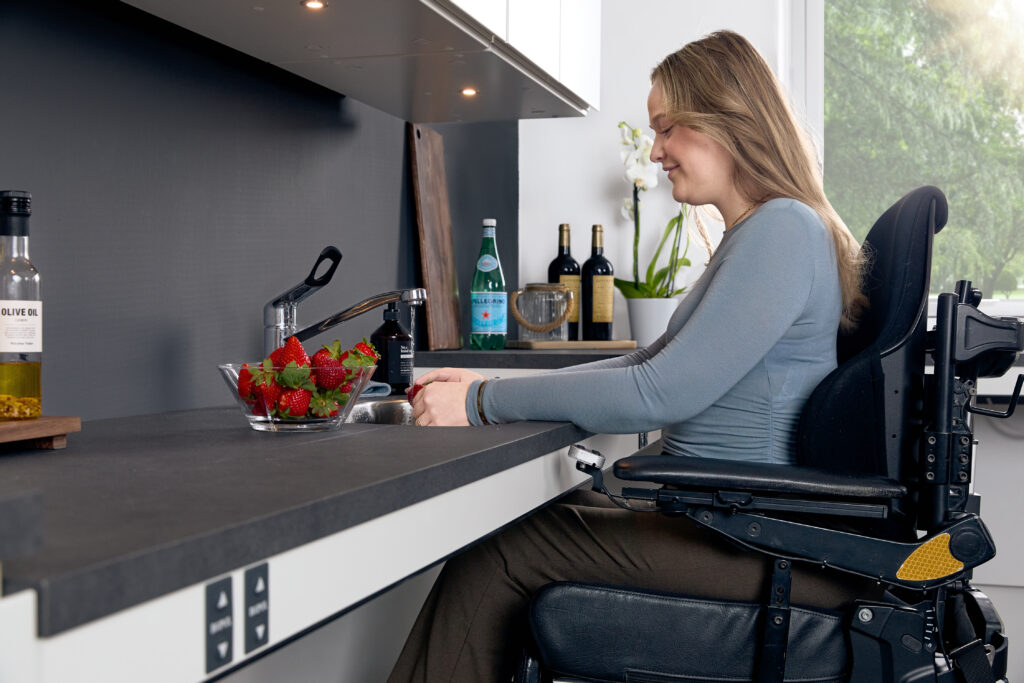
Provide sufficient counter space on either side of the sink and cooking areas. This allows users to place utensils and ingredients within easy reach, reducing the need for excessive movement. A minimum of 600 mm on one side and 400 mm on the other side of the sink is recommended.
Incorporate ergonomic design principles to minimize strain and maximize comfort. This includes rounded edges on countertops, easy-to-grip handles, and lever-style faucets. Ergonomic design ensures that the kitchen is not only functional but also safe for all users.
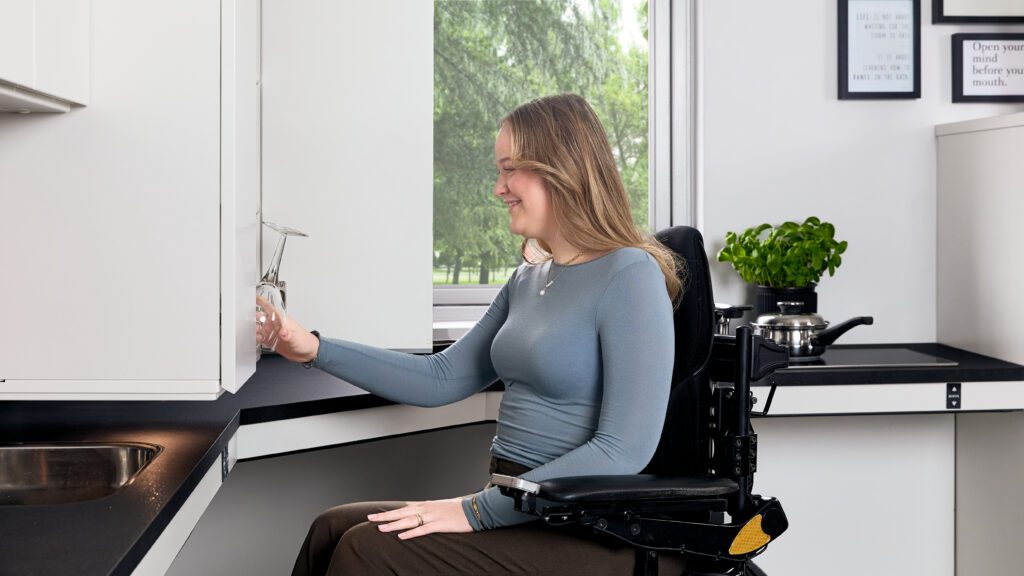
When planning your accessible kitchen design, it’s essential to work with experts who understand the unique challenges and requirements. At Ropox, we collaborate with researchers and kitchen manufacturers to provide the best advice and products for creating an accessible kitchen. Our comprehensive range of products includes height-adjustable worktops, upper cabinets, and various other solutions designed to enhance independence and quality of life.
For a full range of options, explore our accessible kitchens designed to meet diverse needs and preferences.
View Our Height-Adjustable Accessible Kitchen Products
A training kitchen is a specialist rehabilitation space designed to help individuals regain independence through practical cooking and daily living tasks. With adjustable systems and inclusive layouts, rehabilitation kitchens support occupational therapy programmes across hospitals, neurological units and care facilities.
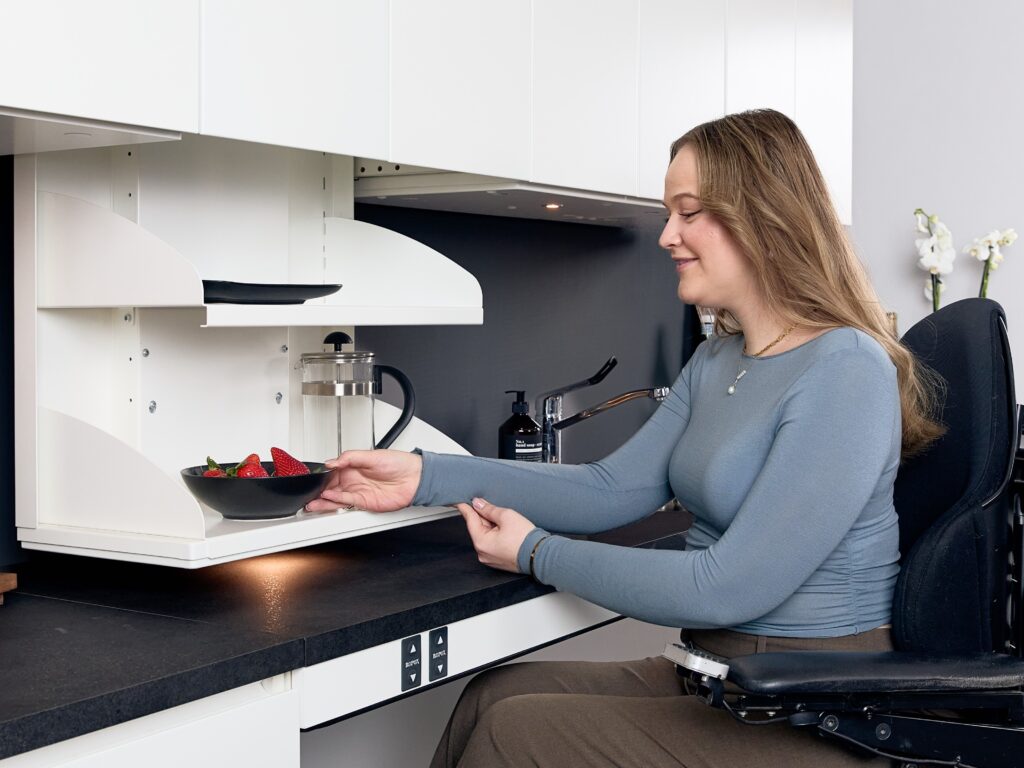
A training kitchen plays a vital role in rehabilitation for people recovering from stroke, brain injury or spinal cord injury. By incorporating adjustable kitchen worktops and accessible design features, a therapy kitchen enables patients to regain independence and rebuild essential daily living skills.
Depending on the level of injury and mobility, some people can regain their independence relatively quickly, while for others, it can be a case of learning how to do things from scratch and nowhere is this more challenging than in the kitchen.
Ropox, one of the UK’s leading suppliers of accessible bathrooms and kitchens, is helping to address this with its range of accessible kitchen solutions for wheelchair users, including adjustable kitchen worktops and cupboards designed to make the kitchen as accessible as possible to people with reduced mobility.
Many care settings and rehabilitation centres are now using this type of equipment in training kitchens to help their patients regain some independence and increase their confidence. A training kitchen may be used for teaching specific skills, testing and assessing of abilities and monitoring how a patient is progressing.
Occupational therapy focuses on restoring independence through meaningful daily activities. In a rehabilitation kitchen, therapists assess movement patterns, balance, coordination and cognitive function while patients perform real-life tasks such as meal preparation and cleaning.
Best practice involves graded task progression, where activities are adapted to match a patient’s current ability level. Electric height adjustable kitchen worktops, accessible storage and safe appliance positioning allow therapists to modify environments instantly, ensuring each patient can participate safely and effectively.
Learn more about how our electric height adjustable worktops support occupational therapy environments.
There are a huge number of activities performed in a kitchen, all of which need to be taken into consideration. These include:
Listing and prioritising the importance of each of the above and possibly even more activities can help when developing the design brief to ensure the final design and layout meets the needs of everyone involved.
Individual users will often need to carry out these activities at different heights. For example, cooking at the hob may be easier at lower heights than when washing up at the sink and using a mixing bowl at a lower worktop height than when slicing vegetables.
Solutions such as the 4Single height adjustable table for accessible kitchens can also support shared activities and flexible rehabilitation tasks within the space. They can learn or re-learn individual skills at the three main working areas – the hob, preparation area and sink while also having access to the oven and fridge.
The electric height adjustment makes it possible for people to work at the most ergonomic height and with good leg access below, seated patients can get the best possible position in relation to the work surface while people who stand can work at the best height for their balance or reach.
The linear design of a worktop split in two, allows two people to work in the same area and therapists/trainers can help from the left or the right-hand sides of each individual with the end result being a faster recovery of important skills.
When designing a training kitchen for rehabilitation, it is essential to ensure compliance with UK accessibility regulations. Approved Document M of the Building Regulations 2010 outlines guidance for wheelchair accessible layouts, circulation space and worktop height requirements.
A properly designed wheelchair accessible kitchen should provide adequate turning space for wheelchair users, accessible appliance positioning and adjustable work surfaces that accommodate both seated and standing users. For further guidance on layout planning, read our accessible kitchen design guide for care and rehabilitation environments.
For more information about compliant design solutions, explore our accessible kitchen solutions for care settings and ensure your installation meets best practice standards.
One such example of a care setting which is using a therapy kitchen can be found at Homerton Transitional Neurological Rehabilitation Unit in east London. Two years ago, the unit installed a therapy kitchen consisting of an oven with a fold away door, hob, sink, two adjacent Ropox electric height adjustable worktops and an adjustable wall unit system. The worktops have a 300mm height adjustment which provides a worktop height range of 690mm to 990mm making it suitable for most wheelchair users and both staff and residents are reaping the rewards as Joanna Lyndon-Cohen, a Highly Specialist Occupational Therapist, at the unit explains.
“We have patients here with a range of neurological conditions ranging from strokes and traumatic brain injuries to spinal cord issues, Parkinson’s and MS; and over the past two years many patients have benefitted from the equipment.
“When people have suffered a stroke, brain or spinal cord injury, they will have often gone from being more independent to needing help to do daily activities. It is our role here to help manage this and often re-educate them so they can once again complete day-to-day tasks which we all take for granted.
“For many of our patients, being able to make their own meals is hugely important as it can help with their independence and confidence and the training kitchen provides them with the opportunity to practice their meal preparation skills.“
“By having a split-level work top, one patient can be working from their wheelchair while another can be working from a standing position.”
Among the patients currently using the training kitchen is Mustafa who has benefited greatly from being able to use all the equipment. He says: “The kitchen is very easy to use and has really helped with my confidence. I can now make a cup of tea, my own breakfast and prepare my home-made soup”.
Joanna explains: “When Mustafa arrived he was using a wheelchair. He has now progressed to just using a walking frame, and thanks to the height adjustable worktops he has been able to use the kitchen from day one. From our perspective, seeing the difference a training kitchen can make is just fantastic.”
Investing in a professionally designed rehabilitation training kitchen delivers long-term value for care homes, hospitals and neurological rehabilitation units. Adjustable and accessible kitchens allow facilities to support a wider range of patient needs without repeated structural changes.
Because electric height adjustable systems can accommodate different users throughout the day, staff can work more efficiently while reducing physical strain. This adaptability improves workflow for occupational therapists and reduces the need for additional specialist equipment.
Over time, this results in improved rehabilitation outcomes, higher patient satisfaction and better utilisation of therapy spaces. Facilities that prioritise inclusive kitchen design often see faster skill progression and increased patient confidence in independent living tasks.
To learn more about the experience and expertise behind these solutions, visit our About Ropox page.
Products that are adjustable to fit the individual user’s needs are essential when installing a training kitchen. Accessibility features should allow both wheelchair users and standing users to work comfortably, while user-friendly controls make it easy for staff and patients to adjust equipment safely.
Careful space planning is also important to ensure there is enough room for wheelchair manoeuvrability, safe movement between workstations and clear access to appliances such as ovens, hobs and refrigerators. Adjustable systems, including electric height adjustable worktops and accessible wall units, allow therapists to adapt the kitchen environment to suit each individual patient.
Safety features such as fold-away oven doors, accessible sinks and stable work surfaces help reduce the risk of accidents during therapy sessions. Professional installation and proper staff training also ensure that the kitchen can be used effectively as part of rehabilitation programmes, supporting patients as they rebuild everyday cooking and food preparation skills.
Read more in The Building Regulations 2010. Find the wheelchair accessible lay-out on page 37.