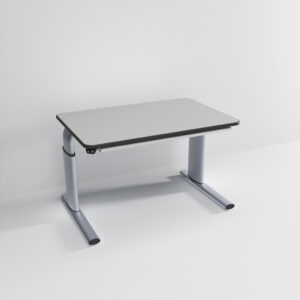
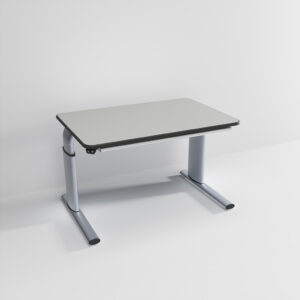
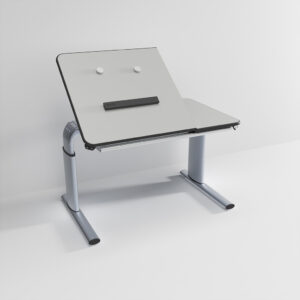
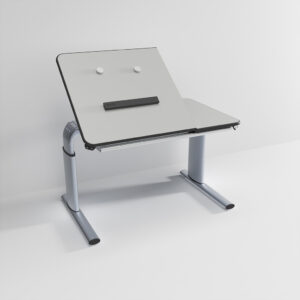
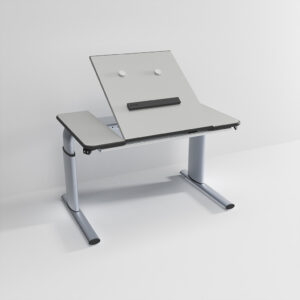
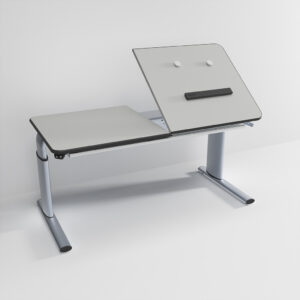
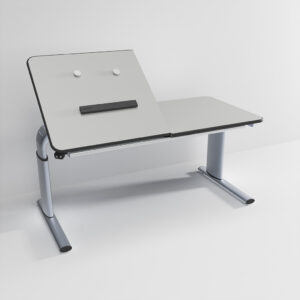
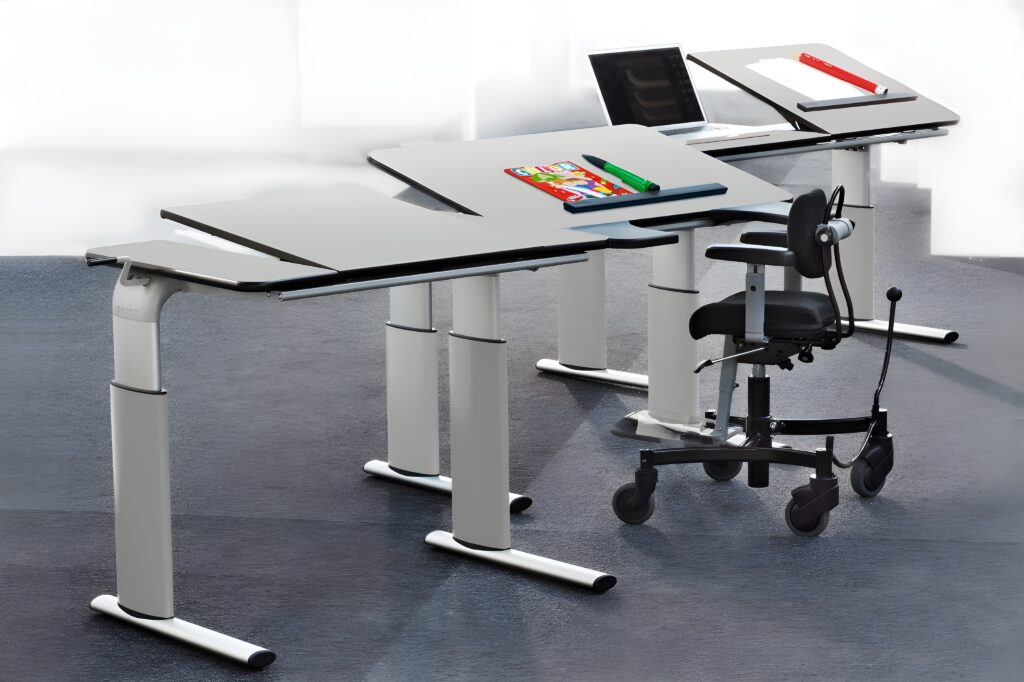
Vision table is available with manual or electric height adjustment to suit the ideal ergonomic working position for any user — whether seated in a wheelchair, sitting in a standard chair, or standing.
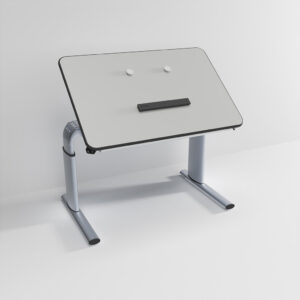
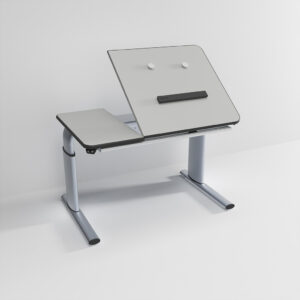
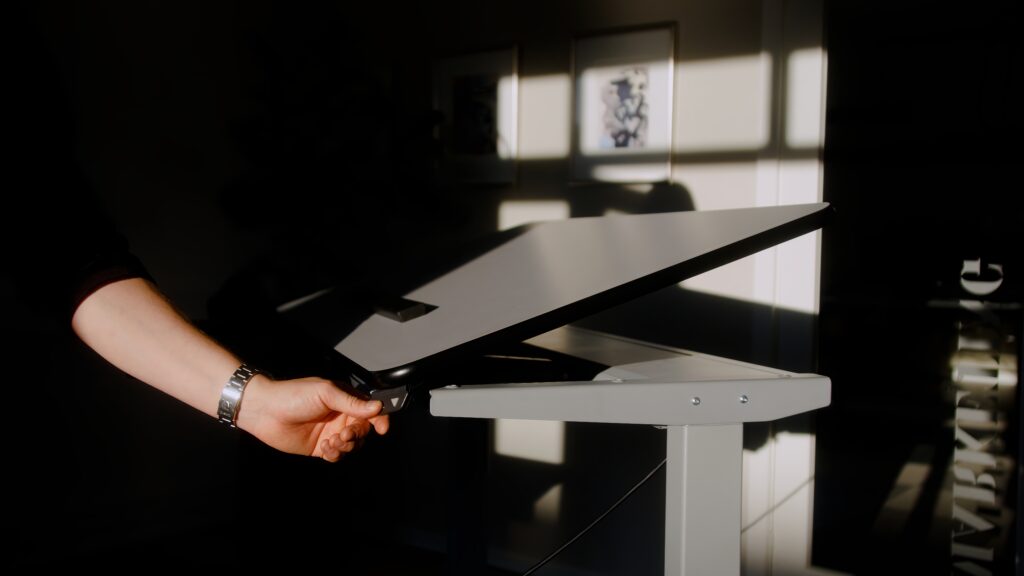
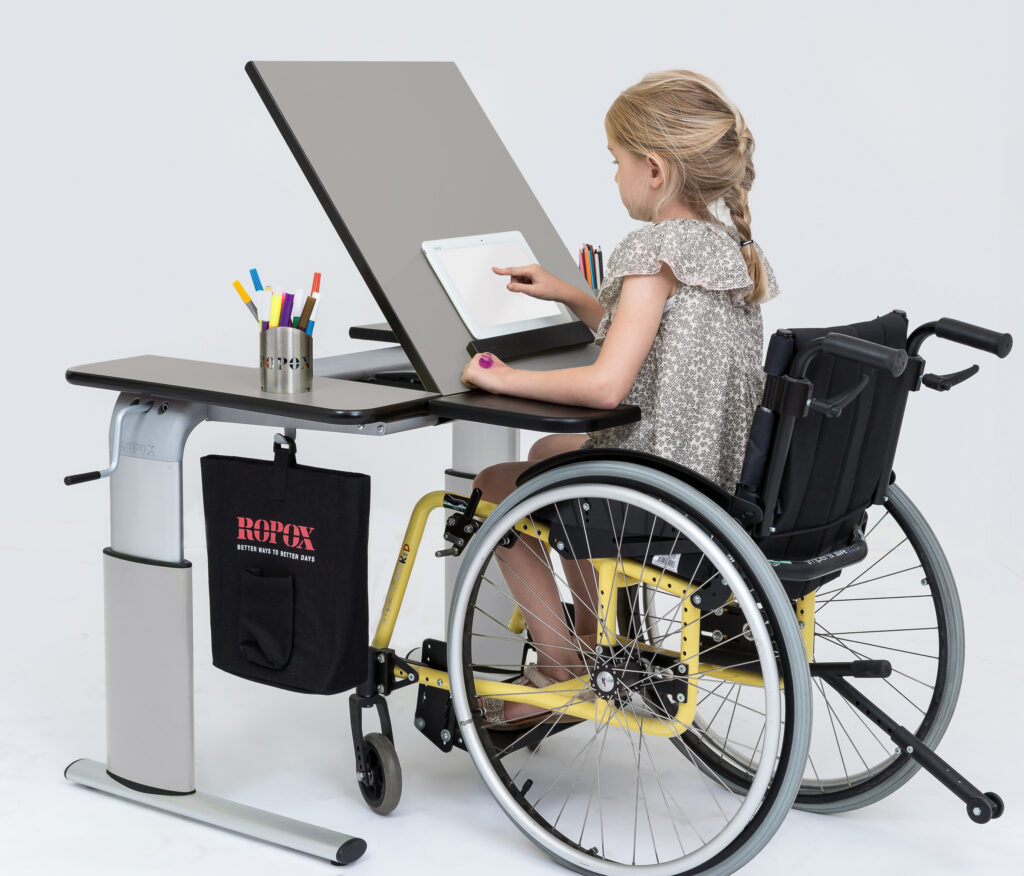
Tiltable tabletop – up to 71°
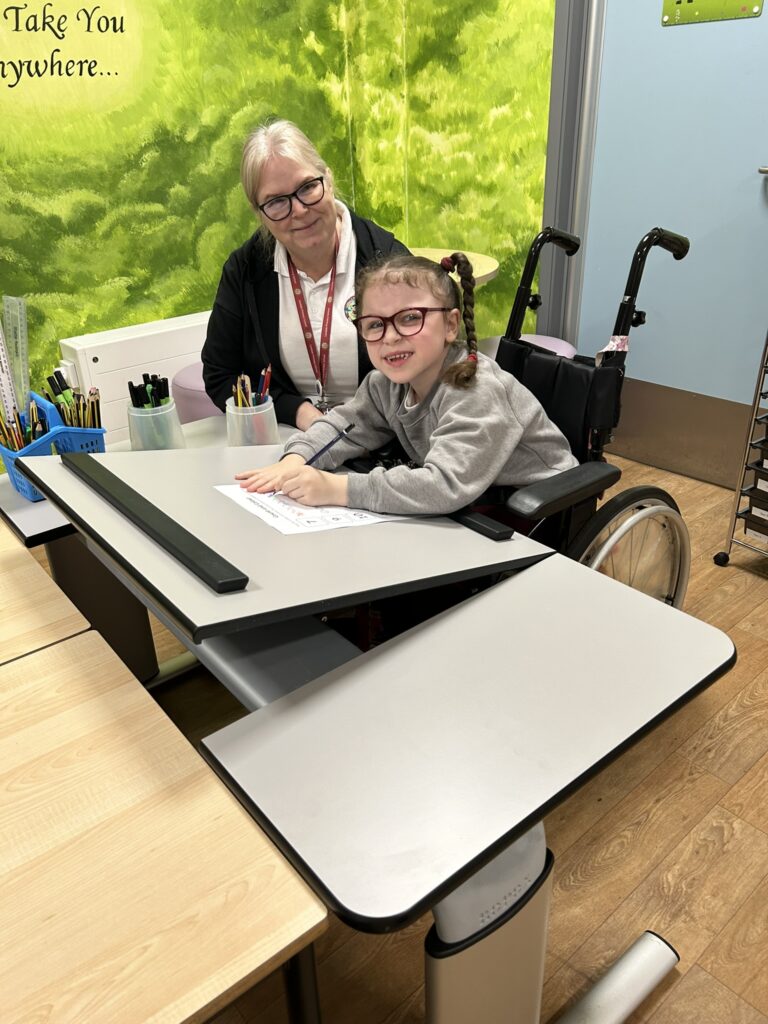
The tabletop can tilt up to 74°, helping bring reading and working materials closer to the user. The tilting section can be positioned centrally, to the left, or to the right, and is available with either a fixed or adjustable side.
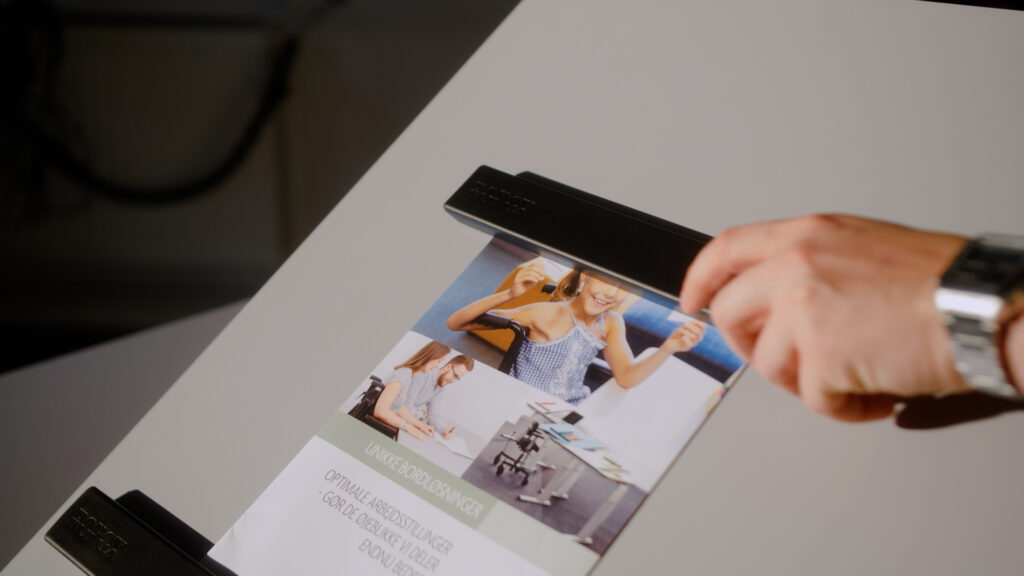
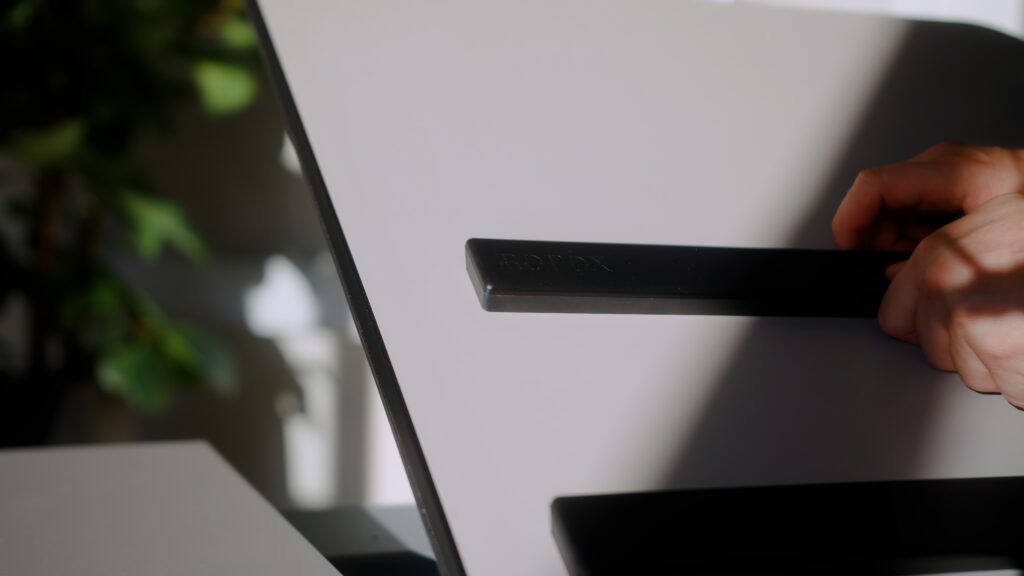
Magnetic work surface
Integrated magnetic functionality allows documents, books, and papers to remain securely in place — even when the tabletop is tilted. The magnetic strip can be positioned as required, making it particularly beneficial in education and therapy settings.
Accessible design – no cross bars
The open frame design provides generous legroom with no cross bars beneath the tabletop. This allows wheelchair users and individuals in supportive seating systems to sit closer to the table comfortably and safely.
Ideal for visually impaired users
The tiltable tabletop function significantly shortens the visual distance between the user and the surface, making the table particularly well suited to users with weak or reduced sight.
Built-in safety stop
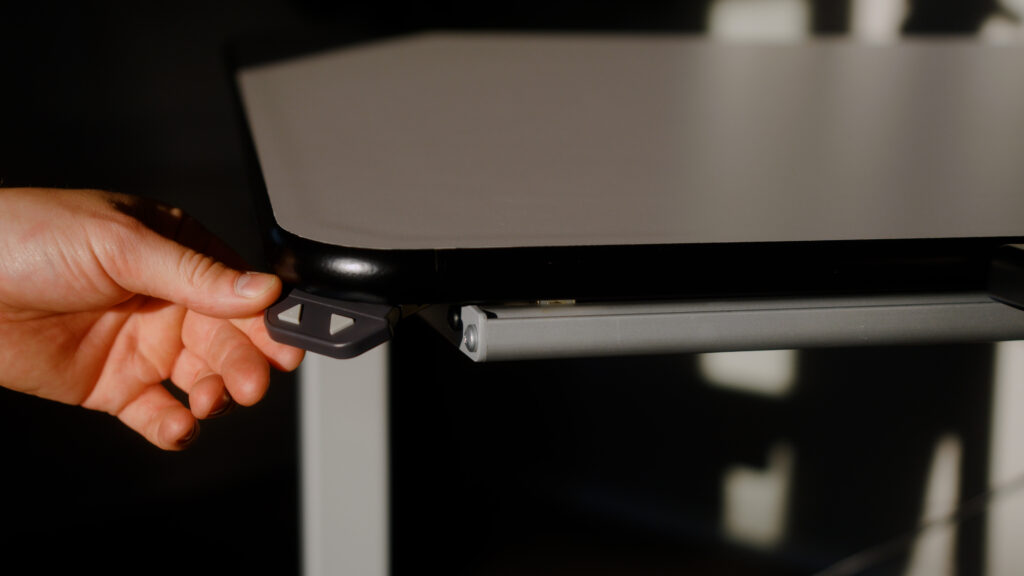
The tiltable tabletop includes an integrated safety stop that halts movement immediately if any resistance is detected during adjustment — ensuring safe operation for all users, including those with limited reaction time or unpredictable movements.
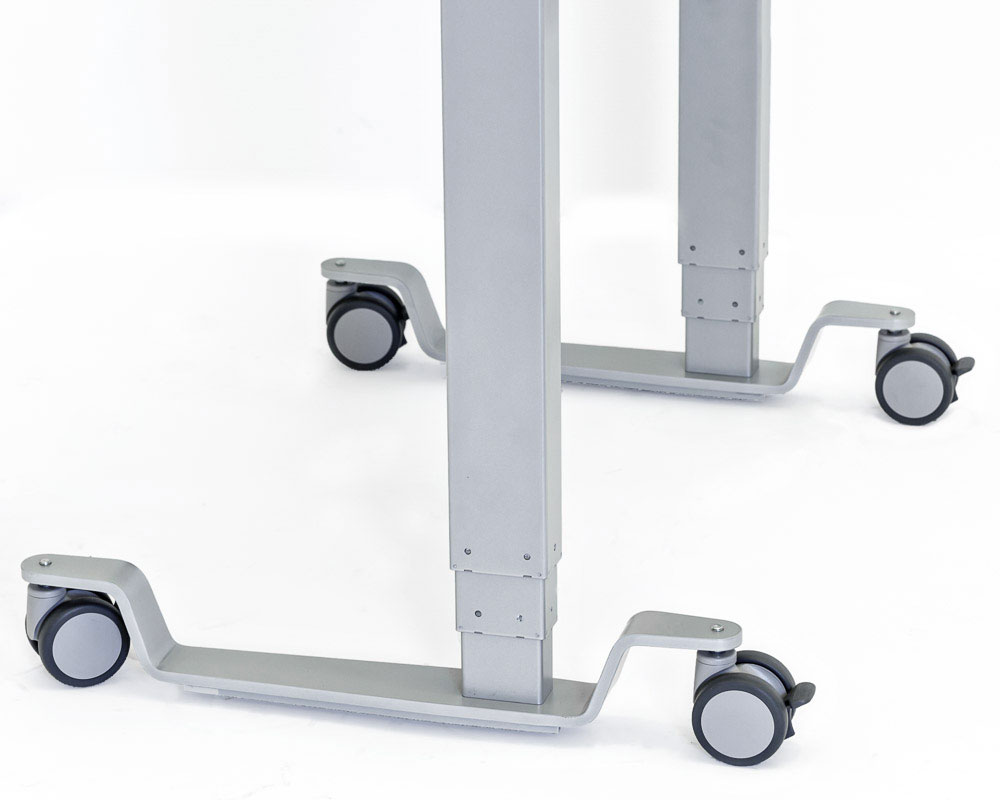
Brake wheels
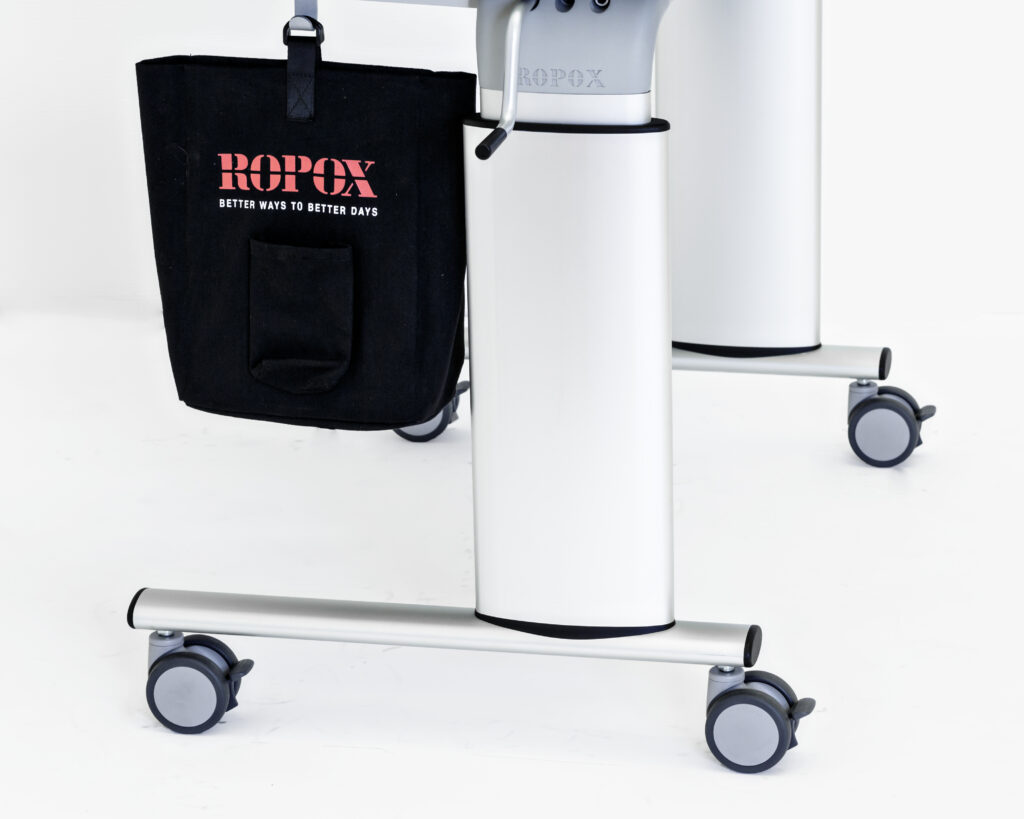
Vision table can be ordered with optional swivel and lockable brake wheels, which help improve manoeuvrability and flexibility of the table within multi use environments. Its robust construction ensures reliability in schools, healthcare, and high traffic environments.
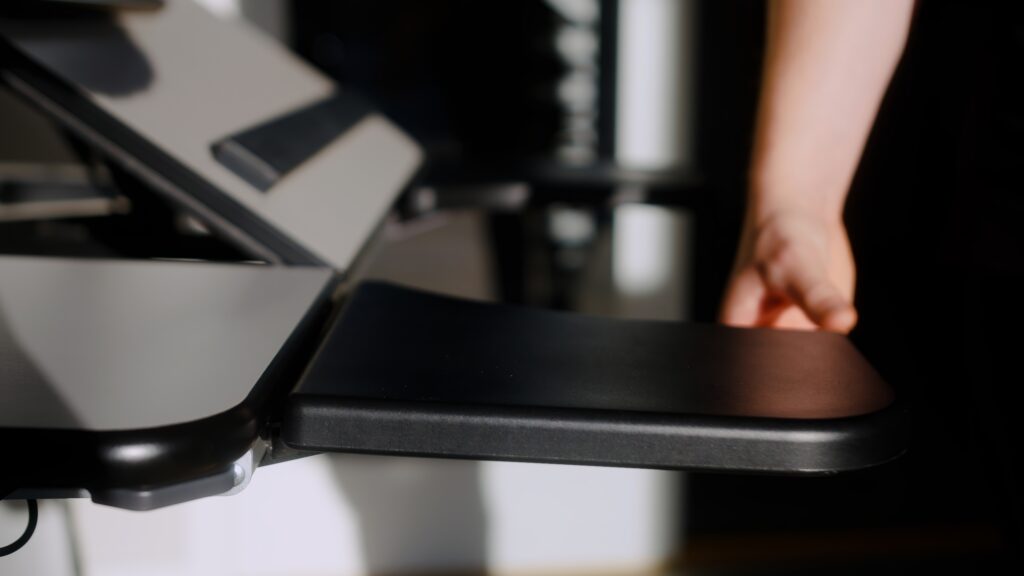
Removable arm supports
The Vision table can be ordered with optional lockable (or standard) arm supports, which provide forearm relief and assist with balanced sitting posture. They offer light upper body support and help reduce strain during prolonged use.
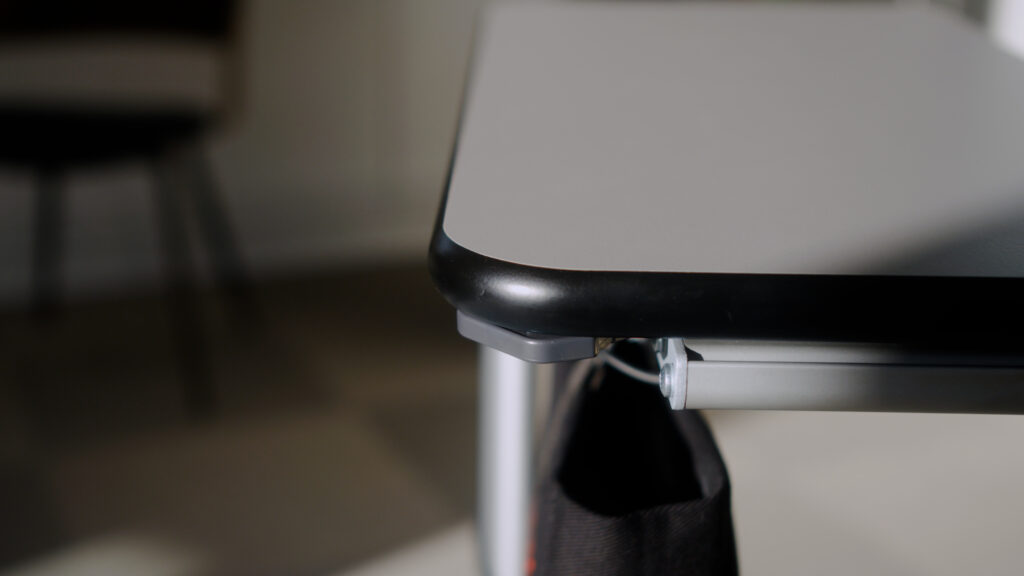
Soft, rounded edges
The tabletop features soft, rounded edges throughout, eliminating sharp corners that could cause injury during use. The rounded design also gives the Vision Table a clean, elegant appearance that feels at home in any environment, from classrooms to private homes.
Brake wheels – with and without height increase
Brake wheels with height increase
This version is used when you specifically want the table to be higher (for example for tall users or to fit certain equipment). Here, the wheels are added without compensating in the frame, so the overall table height is increased.
Brake wheels without height increase
On this version, the wheel unit is built into a specially designed foot that compensates for the wheel height. In practice, this means the frame is lowered by the same amount that the wheel adds. The result is that the table keeps exactly the same working height as a standard table without wheels – only the mobility changes.
Suitable Environments
Care Homes
Supports a wide range of daily activities — from meals to reading and social interaction — in a setting that accommodates residents with different needs
Therapy Clinics
Well suited to therapy sessions where materials, or activities need to be brought into the user's optimal working position. The adjustable setup supports therapists in delivering more effective sessions
Schools
Creates an inclusive classroom where students of different abilities can study, and participate in activities comfortably alongside their classmates
Private Homes
Functions as a desk, reading surface, or activity table that adjusts to individual comfort The Vision adapts to the individual and supports independence as part of daily life at home
Wheelchair Desk for Therapy and Development Benefits
The Vision Table is widely used within therapy programmes due to its ability to support physical, cognitive, and developmental progress.